Monday, February 20, 2006

Important Upcoming Events for English

Two upcoming events, arranged by our estimable Department, will be of interest to students of English & well worth your attending.

  • Honours Information Session
    Thursday, Feb. 23rd, 11:30 am
    AQ 6093
  • English Career Panel, or, What to Do with Your English Degree
    Monday, March 6th, 3:30 pm
    Maggie Benston Centre, Rooms 2290-2292

Virginia Woolf 1925 Review of Waley's "Genji"

Ahead of our March 16th visit from translator & Genji scholar Dr. Sonja Arntzen, please studiously read this 1925 review by Virginia Woolf of Waley's translation of the Tale of Genji.

Film Screening

A film version of a modern Japanese novel The Woman in the Dunes will be shown Wednesday March 15th at 7:00 pm in AQ 3181. There will be sufficient room for any of you who wish to attend.

Wednesday, February 15, 2006

Expanded Office Hours at Reading Week

During the reading week I will be keeping all my regular office hours, but I will also be having office hours during the scheduled class times. So, next week I will be available for drop-in as follows:
Monday: 9:30-15:30
Tuesday: 11:30-15:00
Wednesday: 9:30-15:00
Thursday: 13:30-15:00.
Friday: by appointment.

Tuesday, February 14, 2006

Mid-term Essay: Topics

To identify and appreciate the fundamental and radical difference between the worldviews of the Heian aristocracy and the modern West, a number of æsthetic and intellectual modes of Japanese thought have been introduced and detailed in lecture. The following choice of topics provide you with the opportunity to apply your new understanding in a scholarly endeavour -- according to the criteria posted in the course syllabus.

1.] As a practical application of mushin, detail how Shikibu's text is not like a Western novel by analysing any section or sections in terms of what is not contained of Western literary æsthetics - or, another way, detail the absence of Western literary æsthetics. This topic, in other words, disciplines you to bring Zen "ego-less-ness" to the genji monogatari.

2.] The Pillow Book is, as we have learned, an intensely personal collection of writing from Murasaki Shikibu's Heian contemporary, Sei Shonagon, that combines monozukushi, or catalogues of things; zuisou, or occasional thoughts; and nikki or diary. Using the techniques of literary analysis and principles of the Japanese æsthetic, draw up a scholarly portrait of the character of Sei Shonagon as represented in what is literally her autograph.

3.] American lawyer John Luther Long wrote Madame Butterfly in 1898 without benefit of any direct experience of Japan or Japanese. He drew his story from the reflections of his sister, Mrs. Jennie Correll, upon her years as a missionary's wife in Nagasaki. With the kind of miracle which is possible only via genius of artistic imagination, Long not only maintains America at a cool critical remove but encodes certain facts of Japanese culture and literary æsthetic deeply and consistently in his text. Using the genji monogatari as a benchmark, critically evaluate Jennie Correll's sight and sensibility as they are evident in Madame Butterfly.

Monday, February 13, 2006

On Child Custody in Japan

As I said in response to the seminar question on this topic, I have no worthwhile knowledge of it. There is information here, and also here. The first link contains links to and English translations of pertinent articles in Japanese Civil Code.
nb: The administrator of Satan's Trouble With Eve is not responsible for the content of these two (or of any other) external links. No support or opposition to any inclination, opinion or position contained or implied at the external sites.

Thursday, February 09, 2006

Dinosaur MSM sees Blogs, but Dimly

Typical ponderous MSM giant BBC has this sensation of "blog" passed up its length of nerves to its brain-stem. One bit of sense, though tiny:
I regard the blogosphere as a source of criticism that must be listened to and as a source of information that can be used.

The MSM doesn't get blogging, obviously; as dinosaurs always lack the perceptive & cognitive faculties to adapt to the smarter, faster, better new species which have already marked them for extinction. But here, one dinosaur at least sees its nemesis.

Update: The Old Order stirs, notices the rise of blogging, & responds rather peevishly ....

Wednesday, February 08, 2006

Ki-Sho-Ten-Ketsu: Western Novel Comparison?

On the question during lecture about whether any Western novels display similarities to the ki-sho-ten-ketsu form, and whether Joyce's Ulysses qualifies:
  • At the time, my mind went blank in regards to comparative book, a consequence of my deliberate discipline of maintaining a solid mental firewall during our class against any Western analogues to Japanese patterns of thought, principles of æsthetics, or cultural forms. Out of class, however, I quickly recalled that Proust's A la Recherche de Temps Perdu, which I had read as an undergraduate, came to my mind as was first reading Genji some years ago. Indeed, if you think about the ki-sho-ten-ketsu literary form, as I detailed it in lecture, in contradistinction to Western forms, and should you be familiar with Proust, you will realise that his great work's wide reputation for meandering, indirection and shapelessness matches the formal character of Genji. Alas for my posterity, I have since discovered that my elders have already made very much this same discovery ....
  • The suggestion of Joyce's Ulysses was a creditable attempt, especially off-the-cuff. However, as I affirmed at the time, Joyce is almost the anti-Shikibu & Ulysses almost the anti-Genji. Ulysses is determinedly the most Western of all stolid Western attempts by a Western writer to resolutely write a Western novel that encapuslates all Western novel-ness. Joyce's book -- & even more so his ultimate work Finnegans Wake -- unabashedly demands that the reader bring as much knowledge of Western history, culture & literature as possible to the text. (Indeed, even the non-Western elements in Joyce are the kind of "knowledge" that a parochial Westerner has of the non-West.) In other words, Ulysses & Finnegans Wake alike are excessively "writer-responsible" (vide John Hinds, 1987) surpassed only by William Blake's impenetrable Prophetic Books - Blake being the ne plus ultra of writer-responsible authors. Lack of understanding of Joyce, then, is considered by Jocyeans (& certainly by Joyce) a failure of the reader.

I will deal in a seperate post with the nature of ki-sho-ten-ketsu in literary applications, and in terms of its "reader-responsible" nature.

Tuesday, February 07, 2006

Betty Lambert Memorial Prize

The English Department requests submissions for the Betty Lambert Memorial Prize. The prize is awarded annually to the best unpublished play written by an undergraduate SFU student who is enrolled in at least 9 credit hours at SFU.

The prize will be equal in value to the interest accrued from the endowment fund established in Ms. Lambert's memory. Submissions will be adjudicated by a panel named by the English Department's Undergraduate Curriculum Committee. The closing date for this prize is March 1, 2006.

Address submissions to:

Betty Lambert Memorial Prize
c/o Department of English
Simon Fraser University
Burnaby, B.C. V5A 1S6

If there are further questions, please contact the English Department.

Class tea time

By all means, bring your own yunomi (cup for Japanese tea) to each class for the o-cha. I will switch to styrofoam cups after the current paper ones are used up for those who prefer not to.

Sunday, February 05, 2006

Class' Seminar notes

I now have all the contributions from the seminar discussion of a week ago. My thanks.
I will format & edit slightly & have them blogged here shortly.

Saturday, February 04, 2006

On Wabi & Sabi

The connected concepts of wabi and sabi that I introduced and explained in lecture this past week provide, as stated, an effective framework for understanding the Japanese æsthetic and thus civilisation template. As you now hopefully can see, wabi and sabi together represent a large-scale conceptual mapping of the uniquely Japanese way of relating to the world than the more concisely limited elements to which you were introduced earlier and which are in a sense incorporated by the wabi and sabi systems.

Two things are worth emphasising at this point. First, it is not to be expected that you will have any firm grasp on their nature or operation. The beginnings of understading of wabi and sabi will come only as you read, enjoy and study Genji. You have been presented with the accrual of æsthetic and intellectual concepts gradually in order that you will be able to appreciate and increasingly recognise their presence as your reading of Genji progresses.

Keep in mind, in this regard, the twin points repeatedly made in lecture that Genji is not a novel designed to fictionalise wabi and sabi and that our task is not to pick out the sections of the author's literary enpuzzlement. Quite the contrary, part of Murasaki Shikibu's superlative genius is revealed in the fact that her artistic sensibility artistry comprehended the many large and unformed ideas and assumptions behind the Heian way of experiencing the world and encoded them in the original literary achievement that is Genji. It was through reading of Shikibu's masterpiece that Japanese artists, critics and scholars in later centuries came to develop and elaborate the notions that became wabi and sabi.

I have come across an excellent book online through our SFU Library which is a collction of essays from various scholars of Japan, entitled Japanese Aesthetics and Culture : A Reader and edited by Nancy Hume. The link, requiring authentication to the SFU proxy server, is here.

The second point to note is that, by the nature of things, wabi and sabi have amorphous boundaries and are fertile of definition and explanation. As we have been learning, the Japanese mind resists systematisation, and is vexed by no shinto hobgoblin of a foolish consistency. You must rid your mind, grasshopper, of a need to find limiting safety in fixed definition and tight agreement along your path to enlightenment in wabi and sabi.

My own interpretations of the concepts are quite centric, and are those which, I believe, make them most readily accessible to Western students, without in any way sending them off on any misleading directions or falsifying by over-simplification. I have been informed in this, most obviously, by the modern great D.T. Suzuki, whose Zen & Japanese Culture will be be found on our course reserve. As proof, consider this quotation on sabi-ness from one of the authors collected in the reader linked above:

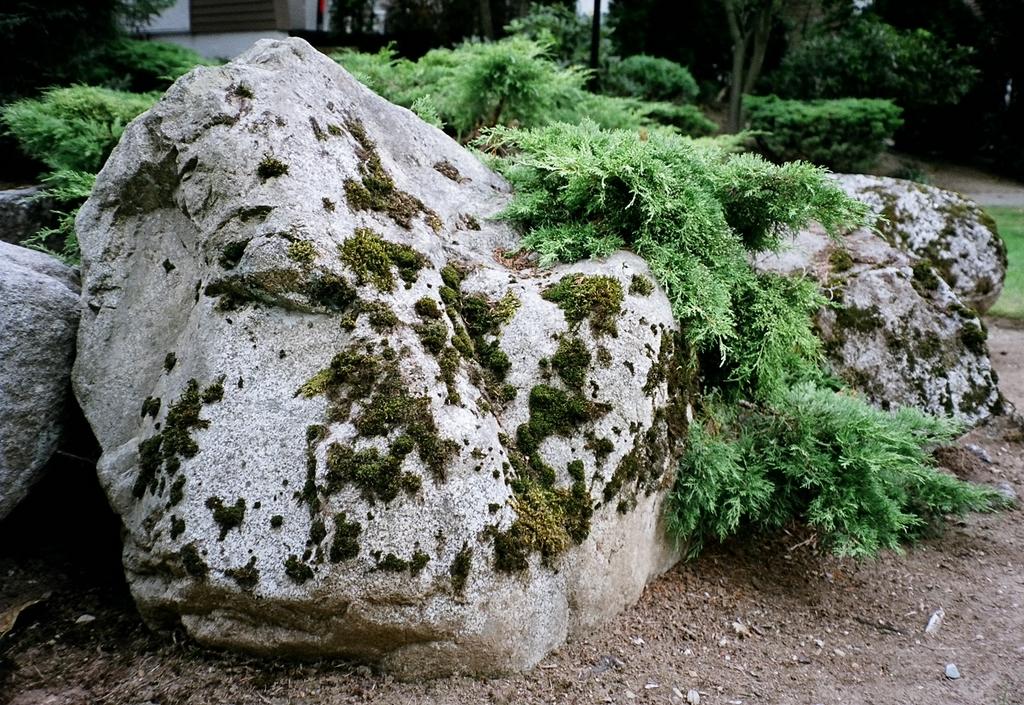
Towards the end of the medieval period another aesthetic ideal, that of sabi, joined yugen. Sabi was a very old word, found as far back as the Manyoshu where it has the meaning of "to be desolate." It later acquired the meaning of "to grow old" and it is related to the word "to grow rusty." In Tale of the Heike we find it used in the sentence, "It was a place old with moss-covered boulders, and he thought it would be pleasant to live there." It seems likely that already by this time (the thirteenth century)sabi suggested not only "old" but the taking of pleasure in that which was old, faded, or lonely. To achieve the end of yugen, art had sometimes been stripped of its color and glitter lest these externals distract; a bowl of highly polished silver reflects more than it suggests, but one of oxidized silver has the mysterious beauty of stillness, as Seami realized when he used for stillness the simile of snow piling in a silver bowl. Or one may prize such a bowl for the tarnished quality itself, for its oldness, for its imperfection, and this is the point where we feel sabi. If the Noh is the highest expression of yugen, sabi is most profoundly felt in the tea ceremony, and to attend one even today is to get a glimpse of sabi at its purest. The tea hut is extremely bare and almost devoid of color. If a flower is arranged in a vase, it is usually a single, small blossom of some quiet hue or white. The tea utensils are not of exquisite porcelain but of coarse pottery, often a dull brown or black and imperfectly formed. The kettle may be a little rusty.

Less Wiki More Encyclo

Return to this post for regularly accruing evidence against scholarly use of (shudder) "wiki-"pædia. Today's occurence is detailed in the soft-left Washington Post and is entitled "On Capitol Hill, Playing WikiPolitics."

Update: it gets outright rotten.

On Puzzlement

The feelings of puzzlement that some of you have expressed to me over the ideas presented in lecture is not a bug: it's a feature! Keep in mind that you are encountering an entirely different civilisation -- and that a millenium ago -- and thus it is a pedagogical necessity that you are puzzled at first engagement.

The intention is to allow you to encounter a foreign civilisation .... as a foreign civilisation. The (to me unsatisfactory) alternative is to intellectually colonise the other civilisation - to facilely experience that culture as if it were merely an exotic outpost of one's own. The following passage from
C.S. Lewis, concerning the reading of old books, applies nicely, mutatis mutandis, to these two alternatives:

There are, I know, those who prefer not to go beyond the impression, however accidental, which an old work makes on a mind that brings to it a purely modern sensibility and modern conceptions: just as there are travellers who carry their resolute Englishry with them all over the Continent, mix only with other English tourists, enjoy all they see for its 'quaintness', and have no wish to realise what those ways of life, those churches, those vineyards, mean to the natives. I have no quarrel with people who approach the past in that spirit. I hope they will pick none with me. But I was writing for the other sort.
Thus, puzzlement is the necessary early consequence of giving Japanese civilisation the dignity of unique identity. Fairly quickly, however, your experiential engagement with Japanese literature will (all too quickly) provide the natural and certain effect of familiarity.

On Ikebana & Art is Life

A counter-view to my studious exceptionalism in regards Japan and the West comes from classfellow Maja B. who kindly sends the following two poems, skillfully excerpted, from Wallace Stevens and Syvia Plath, that, in her view, resonante with my translation of the term for Japanese flower arrangement -- ikebana -- as flowers kept alive. A passage on ikebana by Mishima Yukio in his Temple of the Golden Pavilion expresses this principle in relation to his understanding of a Japanese attitude to human life:
The movement of Kashiwagi’s hands could only be described as magnificent. One small decision followed another, and the effects of contrast and symmetry converged with infallible artistry. Nature’s plants were brought vividly under the sway of an artificial order and made to conform to an established melody. The flowers and leaves, which had formerly existed as they were, had now been transformed into flowers and leaves as they ought to be. The cattails and the irises were no longer individual, anonymous plants belonging to their respective species, but had become terse, direct manifestations of what might be called the essence of the irises and the cattails.
Yet there was something cruel about the movement of his hands. They behaved as though they had some unpleasant, gloomy privilege in relation tothe plants. Perhaps it was because of this that each time that I heard the sound of the scissors and saw the stem of one of the
flowers being cut I had the impression that I could detect the dripping of blood.

Wallace Stevens - Man with the blue guitar (excerpt)

I

The man bent over his guitar,
A shearsman of sorts. The day was green.

They said, "You have a blue guitar,
You do not play things as they are."

The man replied, "Things as they are
Are changed upon the blue guitar."

And they said then, "But play, you must,
A tune beyond us, yet ourselves,

A tune upon the blue guitar
Of things exactly as they are."

II

I cannot bring a world quite round,
Although I patch it as I can.

I sing a hero's head, large eye
And bearded bronze, but not a man,

Although I patch him as I can
And reach through him almost to man.

If to serenade almost to man
Is to miss, by that, things as they are,

Say that it is the serenade
Of a man that plays a blue guitar.

III

Ah, but to play man number one,
To drive the dagger in his heart,

To lay his brain upon the board
And pick the acrid colors out,

To nail his thought across the door,
Its wings spread wide to rain and snow,

To strike his living hi and ho,
To tick it, tock it, turn it true,

To bang it from a savage blue,
Jangling the metal of the strings...

IV

So that's life, then: things are they are?
It picks its way on the blue guitar.

A million people on one string?
And all their manner in the thing,

And all their manner, right and wrong,
And all their manner, weak and strong?

And that's life, then: things as they are,
This buzzing of the blue guitar.


Sylvia Plath - Love is a Parallax (excerpt)

The paradox is that 'the play's the thing':
though prima donna pouts and critic stings,
there burns throughout the line of words,
the cultivated act, a fierce brief fusion
which dreamers call real, and realists, illusion:
an insight like the flight of birds:
Arrows that lacerate the sky, while knowing
the secret of their ecstasy's in going;
some day, moving, one will drop,
and, dropping, die, to trace a wound that heals
only to reopen as flesh congeals:
cycling phoenix never stops.

Wednesday, February 01, 2006

Civilisation Exclusivity

As you have hopefully noticed, I am sedulously avoiding the use of Western labels in my introduction and explanation of Japanese aesthetic concepts. This is consistent with two of the course axioms I have presented in lecture and here on the blog: one, that Japan and the West are two distinct civilisations, each with its own exclusive fundamental assumptions; and two, that translation -- even radical translation -- is indeterminate.

Some of you have offered on your own very good labels for some of the concepts: "pastoral" and "symbol" are two examples. And, indeed, some of the elements of the overarching aesthetic seem to have an easy Western description. What I am detailing, with some labouriousness, as "the positive presence of absence" is very temptingly similar to the Euclidic concept of gnomon, popularised by literary scholarship of James Joyce (from "The Sisters" story in his Dubliners) as indicating absence.

My general objection to this is that once this type of translation is done, then Japan disappears: it is just one more Western colony. Terms like gnomon and lacuna and pastoral have very powerful cultural -- or, better, civilisational -- history, meaning and resonance; none of which apply to Japan. There is superficial similarity but if the concept is pegged to a Western idea then the meaning in Japan is obliterated.


Symbolism is a strong illustrative case. In the West, semeiotics is not simply what we do, it is in effect what we are. The dualistic assumption that there are visible things and things behind them that have deeper -- nay, real -- meaning is encoded into our individual & collective mental template: semeiotics is the defining feature of Plato & Aristotle, the Hebrew and Christian scriptures, Augustine & Boethius, Descartes & Hegel, Freud & Jung.

To give just one example, the idea that Church and State are seperate spheres starts with Jesus' dictum that one is to "render unto Cæsar that which is Cæsar's and unto God that which is God's," and is more deeply encoded by Augustine's Civitas Dei which declares that the City of Man and the City of God are distinct realms which, though they interpenetrate, demand seperate responses from we who live, at any one time, in one, the other or both.
With this cultural potency -- from the type-archetype construction in the Old & New Testaments to Freud's dogma of the unconscious and exotic interpretational analysis of dreams -- semeioitics is almost what it means to be Western civilisation.

Indeed, in the West's modernist period, ideational chauvanism and colonialism was the (unexamined and arrogant) default assumption. Joseph Campbell was egregiously exemplary in this regard: wandering in lecture across space and time, a facile exegete pronouncing this or that object a symbol of that or the other. Of course, Campbell had merely read his Golden Bough (Frazer being, if it were possible, an even more obliviously conceited pedant) with disarming naïveté and the simple faith of the child.

Frazer or Campbell didn't, but we can and should make the blindingly obvious observation that Japan formed a cultural consciousness without any -- I say any -- contact with, again, any of these ideas or notions. If it is not plain to any scholar among you that there is no flagrant empirical reason why Japan, given the foregoing, should have a mental template that (happy accident for Western writers with a bent toward self-promotion and imperialism in scholarship) is identical our own; then there is, surely, at least a strong influence in the direction of caution and suspension of easy assumption.

Surely, much the better to us to work for that moment of "no-nous" which will give the thrill of perceiving the literary material with a Japanese sensibility for just a flash: a precious, precious flash.


Civilisation Fundamentals

The course thesis that civilisations each have their unique identity -- essentially, a set of assumptions, virtues and traditions -- which is accepted unconsciously by its members and is absolutely untranslatable, receives incidental support from a CNN article, here, treating the aftermath of the recent Al Qaeda bombings of hotels in Jordan.
The article reports that:

Family members of Jordanian-born al Qaeda in Iraq chief Abu Musab al-Zarqawi have renounced the terror leader, telling King Abdullah II on Sunday that they would "sever links with him until doomsday."
Setting aside here any matters of content relative to Islamic terrorism, the relevant point for our course is the reason why al-Zarqawi has been cut off by his tribal family now and not for any of his previous acts of terror. In a phrase, al-Zarqawi has in this case violated a value fundamental to the identity of the wider tribal culture to which he belongs by birth. The article gives a specific quotation from his family group which states the violation in its own cultural terms:
"A Jordanian doesn't stab himself with his own spear," they wrote. "We sever links with him until doomsday."

Against Interprative Colonialism

The approach taken in course lectures toward Japanese civilisation is a diffident one: I defer to the possibility that Japan and the West are different civilisations and accordingly have fundamentally different assumptions.

My acceptance of necessary humility in scholarly engagement with civilisations different from my own was born of my study of, and subsequent teaching courses in, the debate between Francis Fukuyama's End of History thesis and Samuel Huntingdon's counter-thesis on the Clash of Civilisations.

Stated with brutal brevity, Fukuyama argues that Hegel's doctrine of the historical dialectic has been proven true, that the West has attained a free-market economy and free and open democratic elections which, being the desire of all people everywhere, has begun the end of history: i.e. the end of the progress of all civilisations toward universal human freedom. Huntingdon, in opposition, cites Arnold Toynbee, and argues that civilisations, being different from top to bottom, can not only never unite but are certain to and fight in perpetuity.

Oviously, the current violence within the Islamic civilisation in response to a Danish newspaper's polemical statement in affirmation of free speech and freedom of the press is clear support, prima facie, for Huntingdon. Indeed, if you follow this link to a real media clip from Canada's state television station, you will hear an English moslem announce that their violence is a declaration of a "clash of civilisations."

As this picture, and this, and this, and this show, civilisation clashes are real: indeed, Huntingdon states outright that they are frequently bloody and to the death.

Update:
Indeed, judging from moslem comments such as these printed in the Toronto Globe & Mail, Huntingdon must be these days in present danger of a terminal smugness.

Tuesday, January 31, 2006

On Japanese Names

An excellent article on Japanese personal names by a creditable scholar here.

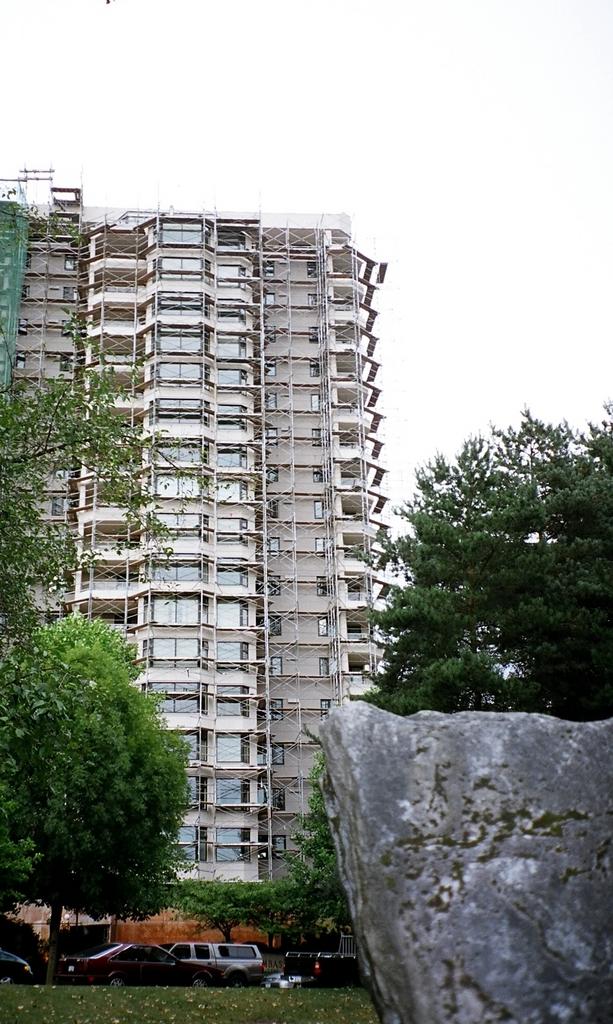
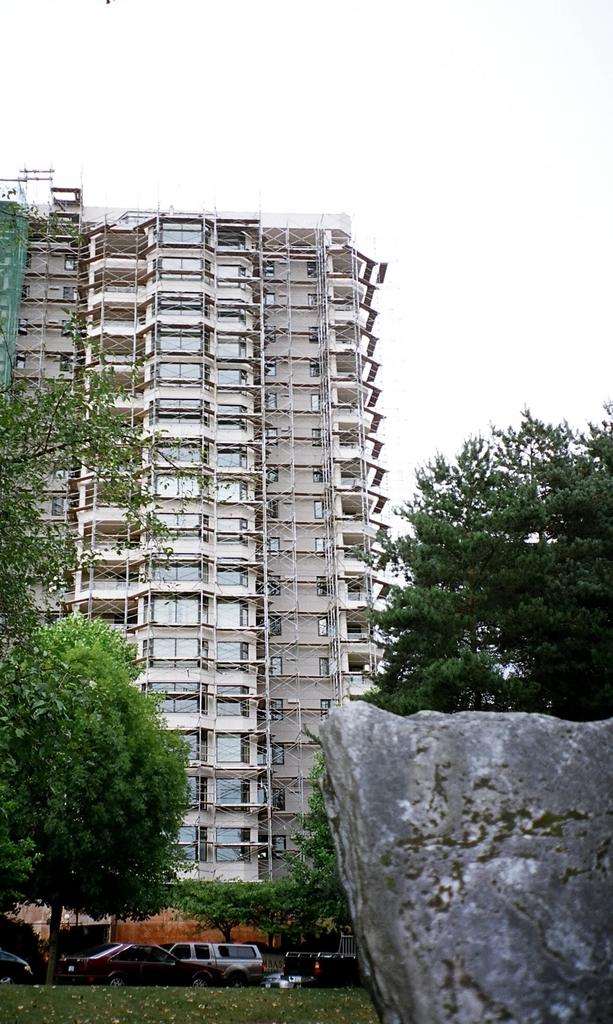
Burnaby Sabi

Some pictures from local artistic photographer, and SFU Librarian, Norma Marier evoke the sense of accident, flaw and deep time that Japanese have refined to the aesthetic of sabi. The sabi-ness is intensified, in Marier's vision, by their place relative to urban density. Update: Click on the pictures for a larger view.